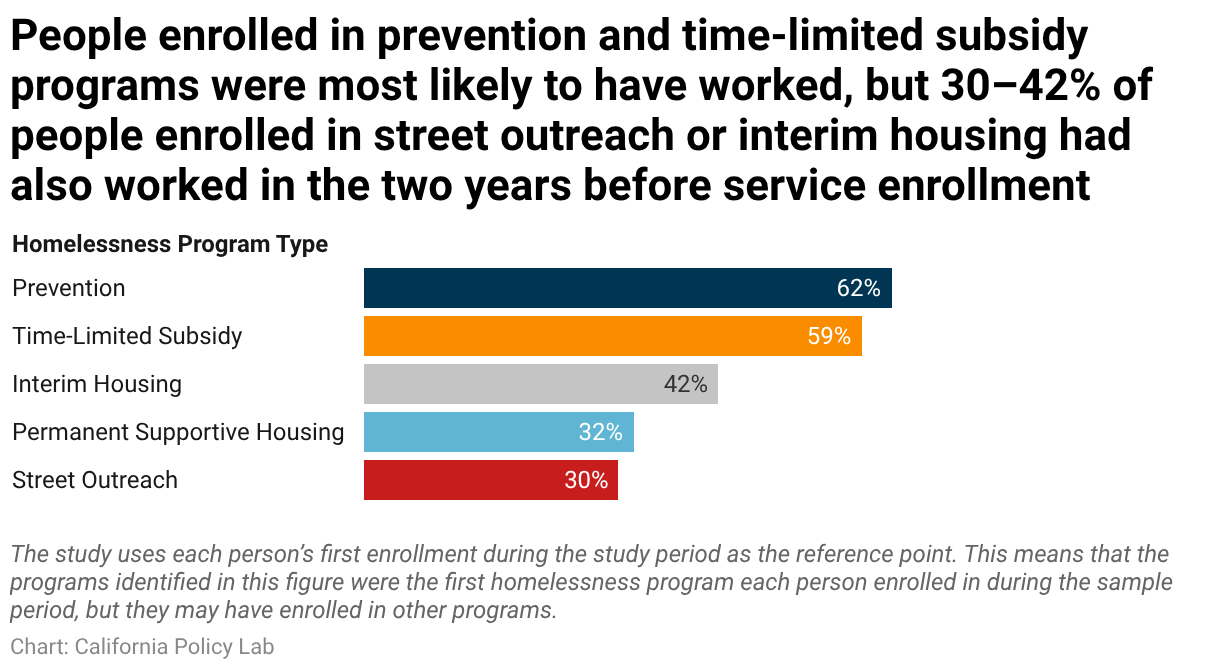
People enrolled in prevention and time-limited subsidy programs were most likely to have worked, but 30–42% of people enrolled in street outreach or interim housing had also worked in the two years before service enrollment
Bar chart showing employment rates in the two years before enrollment by type of homeless service. People in prevention (62%) and time-limited subsidy programs (59%) had the highest employment rates. Employment rates were lower in interim housing (42%), permanent supportive housing (32%), and street outreach programs (30%).