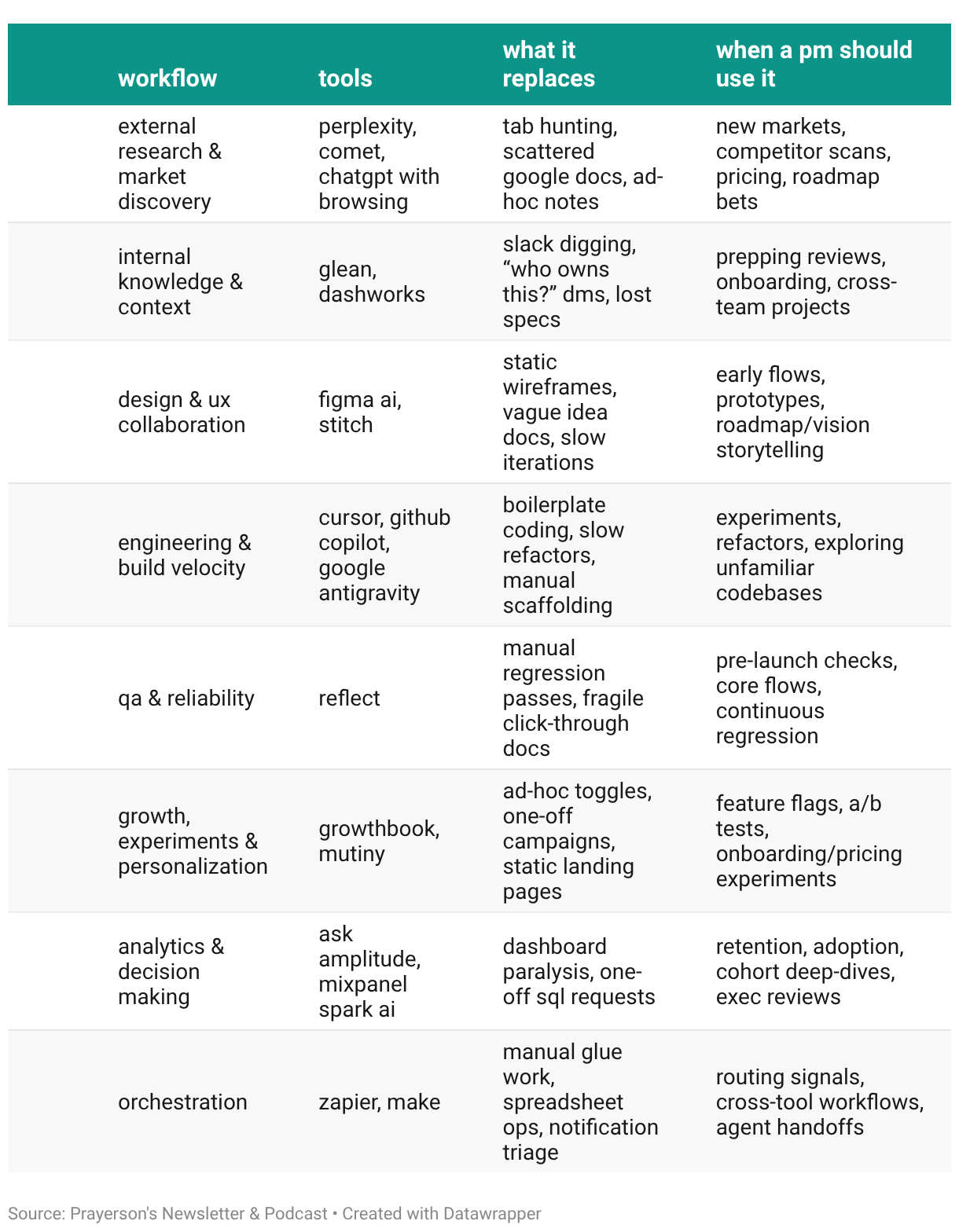
This table lists key parts of a modern product management tool stack: external research, internal knowledge, design, engineering, QA, growth, analytics, and orchestration. For each workflow area, it names the primary tools used, the older practices they replace, and when a product manager should use them. External research uses Perplexity and Comet instead of scattered browser tabs and Google Docs, especially for new markets, competitor scans, and pricing analysis. Internal knowledge tools like Glean and Dashworks replace digging through Slack and asking ‘who owns this?’ when prepping reviews, onboarding, or cross-team projects. Design collaboration uses Figma AI and Stitch instead of static wireframes and long threads, helpful for early flows, concept reviews, and stakeholder alignment. Engineering velocity comes from Cursor and Copilot, which reduce boilerplate coding and speed refactors for experiments and exploring code paths. QA and reliability rely on Reflect instead of manual regression passes, especially for pre-launch checks and regression suites. Growth and personalization use GrowthBook and Mutiny instead of ad‑hoc toggles and static landing pages, ideal for feature rollouts and pricing or onboarding experiments. Analytics and decision-making rely on Ask Amplitude and Mixpanel Spark AI to avoid manual chart building and dashboard overload, supporting retention, adoption, and cohort deep dives. Finally, orchestration uses Zapier and Make to replace manual glue work in spreadsheets and Slack, routing signals and automating cross-tool workflows.